
What Is a Conversion?
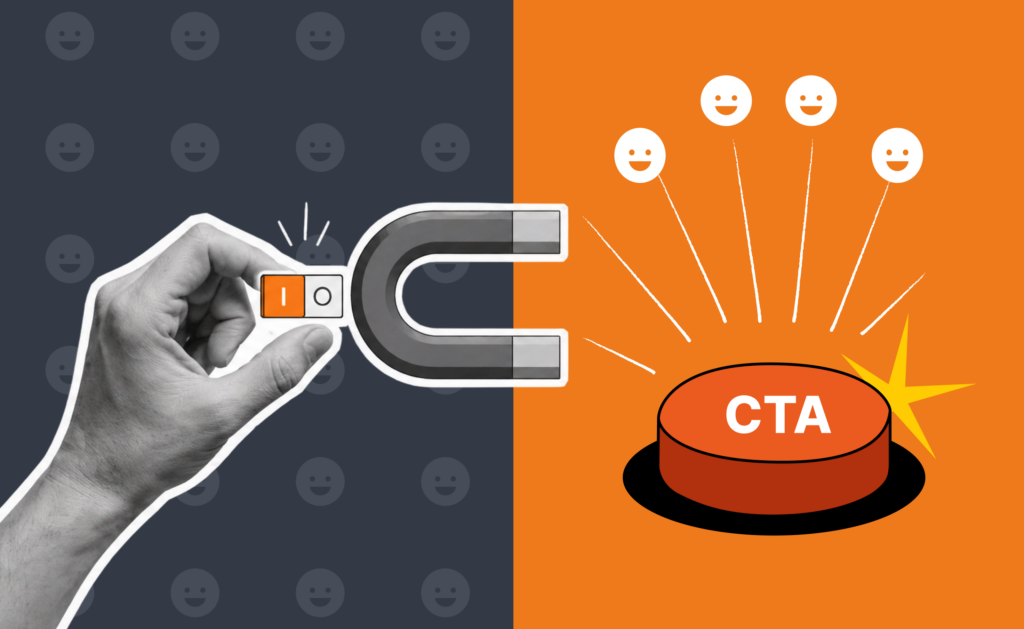
A conversion is the ‘intended action’ we hope to inspire visitors to our websites and apps to make. A conversion is any action a visitor takes that moves them closer to a meaningful outcome.
That outcome depends on the product. It might be a purchase, an account signup, or a booked demo. Focusing only on the final action misses how visitors actually behave. Most people don’t arrive ready to convert. Most people move towards conversion with smaller, incremental steps.
We define conversions in two tiers:
- Primary conversions: the main goal, like completing a purchase or signing up
- Secondary actions: the interactions that indicate interest, such as clicking a call-to-action, exploring a feature, or starting a form
This distinction matters because it shifts the focus from isolated outcomes to the full user journey. This is the foundation of our theory; conversions don’t happen in a single moment, rather they’re built through ongoing interaction.
Why Engagement Matters
Engagement is what moves users from curiosity to action.
Before converting, users are trying to answer a few basic questions: What is this? Does it matter to me? Can I trust it? Is it worth the effort?
If the interface doesn’t help them answer those questions quickly and confidently, they disengage.
Low engagement often shows up as:
- Users leaving without interacting
- Minimal scrolling or exploration
- Drop-off before key actions
These aren’t just surface-level metrics, they’re signs that the experience isn’t doing enough to guide users forward.
Driving Engagement with UI Design
Improving engagement isn’t about adding more content or more features. It’s about making the interface easier to understand, easier to use and more aligned with user intent.
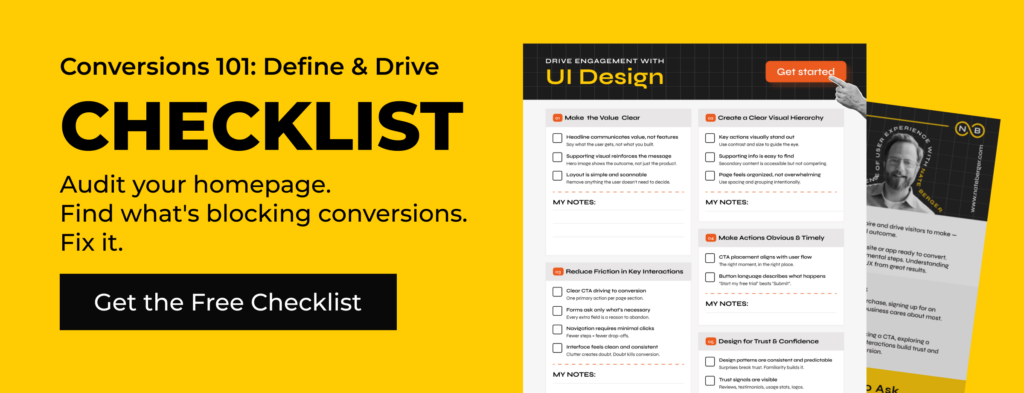
Make the Value Clear
The first few seconds of a visit are critical. Users shouldn’t have to interpret what your product does or why it matters.
Strong interfaces prioritize clarity through:
- Clear headlines that communicate value, not just features
- Supporting visuals that reinforce the message
- Simple, scannable layouts
When users immediately understand what they’re looking at, they’re more likely to stay, explore and convert.
Create a Clear Visual Hierarchy
Engagement drops when everything competes for attention.
A well-structured UI guides users by emphasizing what matters most. This means using contrast, spacing and layout intentionally so that:
- Key actions stand out
- Supporting information is easy to find
- The page feels organized rather than overwhelming
Users shouldn’t have to search for what to do next. It should be visually obvious.
Reduce Friction in Key Interactions
Every extra step or unnecessary decision creates resistance.
Common friction points include:
- No clear call-to-action driving to a conversion
- Forms that ask for too much information
- Navigation that requires too many clicks
- Interfaces that feel cluttered or inconsistent
Simplifying these interactions makes it easier for users to continue engaging rather than dropping off.
Make Actions Feel Obvious and Timely
A call-to-action works best when it feels like the natural next step.
That comes down to a few UI choices:
- Placement that aligns with user flow
- Language that clearly describes what will happen
- Timing that matches user readiness
When actions are easy to find and easy to understand, users don’t hesitate.
Design for Trust and Confidence
Users are constantly evaluating whether an experience feels credible.
UI plays a major role in that perception. Engagement improves when the interface includes:
- Consistent, predictable design patterns
- Clear and transparent messaging
- Visible signals like reviews, testimonials, or usage indicators
Even small inconsistencies can create doubt, which interrupts engagement.
UX Matters
When your UI is clear, friction is low and the next step feels obvious, visitors can move forward naturally. When those elements are missing, even strong products struggle to convert.
Conversions aren’t just the result of user intent, they’re the result of how well the user experience supports that intent.
If you need help with defining and driving conversions for your website or app, contact us today.